
Choose one memory
Begin with a photograph, a journey or an everyday moment rather than an entire life story.
Preserve what matters
A remembered voice, a neighborhood story, a family journey or a photograph can disappear when nobody records the context around it.
Give each memory a source, a voice and a date
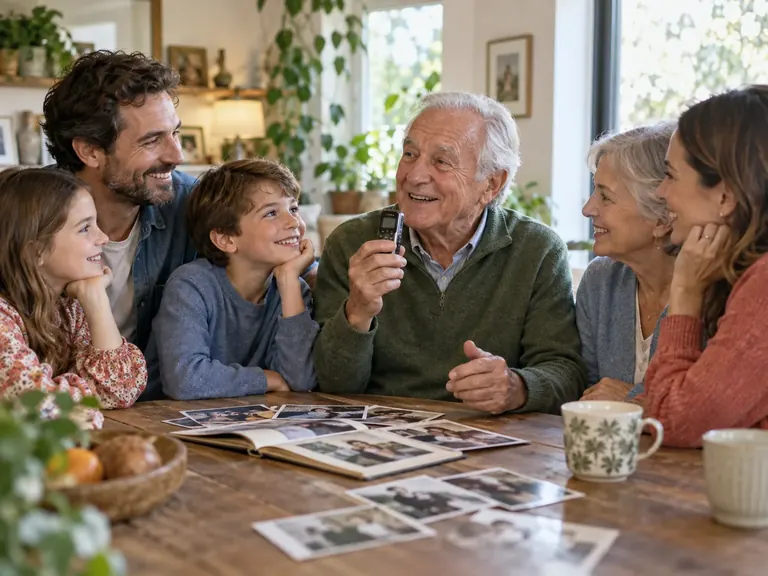
A useful starting point
A lasting archive preserves more than an image. It records who remembers the event, what they know and what future readers should treat as uncertain.
Begin with a photograph, a journey or an everyday moment rather than an entire life story.
Note the recording date, approximate event date, place and the narrator’s permission.
Preserve source material, label edits and keep different recollections in their own words.
Context
Names, dates, places, relationships and small personal details can turn a photograph or memory into something future generations can understand.
Privacy
Relatives, classmates, neighbors or friends may remember different parts of the same story. Their contributions can fill gaps without replacing uncertainty with guesses.
Verification
Label what is known, what is remembered and what remains uncertain. This makes personal history more useful and more respectful.
Helpful next steps
Start with what you know, avoid unnecessary private details and treat every possible connection as unconfirmed until it is supported.
Use approximate years or ranges when exact dates are uncertain.
Describe shared locations, schools, workplaces, journeys or landmarks.
Explain why the memory matters and what kind of connection you remember.
Respect privacy, uncertainty and another person's choice not to reconnect.
Questions about this guide
Start with one photograph, event or remembered phrase. Record who is telling the story, when the account was recorded and the approximate time and place of the event. A small, well-described account is more useful than a long narrative with no context.
Ask open questions: “What do you remember about this day?”, “Who was there?” and “What happened next?” Let the narrator choose what to discuss. Avoid suggesting an answer or pressuring someone to revisit a difficult experience.
Mark what the narrator recalls, what a document supports and what remains uncertain. Record the source and date of each addition. A first-hand account matters, but it may still contain incomplete dates or conflicting details.
Keep the separate accounts and identify who contributed each one, with their permission. Note the disagreement rather than merging it into a single certainty. Differences in viewpoint can be part of the historical context.
Contributor records can be organized in the workspace, but automatic contributor email invitations are not yet completed. Do not assume that adding an email address sends an invitation or grants someone access to your story.
Keep original photographs and documents, use descriptive filenames and maintain another copy in a location you control. Record permission and source information alongside each item. Do not assume that saving a story on a website replaces your own backup.
Privacy before discovery
MissToSee is designed for voluntary discovery, memory and respectful reconnection. It is not an investigation, surveillance or official reporting service.
Ready when you are
Explore more
A little context. A thoughtful next step. Explore a guide at your own pace.
Start with a name, a shared moment or the part you still remember.
Explore the context behind a photograph, with care for the people in it.
Follow visual clues to rediscover a place that matters to you.
See how private requests, careful review and consent guide each step.