A bundle of letters can preserve a school nickname, a place name or the date of a shared event long after those details have faded from memory. It can also contain another person's private words. The most useful approach is not to upload the whole bundle or assume that an old address still works. Start with a small private index that separates a document's actual contents from the questions it raises. This guide explains how to organize correspondence into a limited reconnection plan while keeping the original material and the people connected with it in view.
1. Define the question before opening every envelope
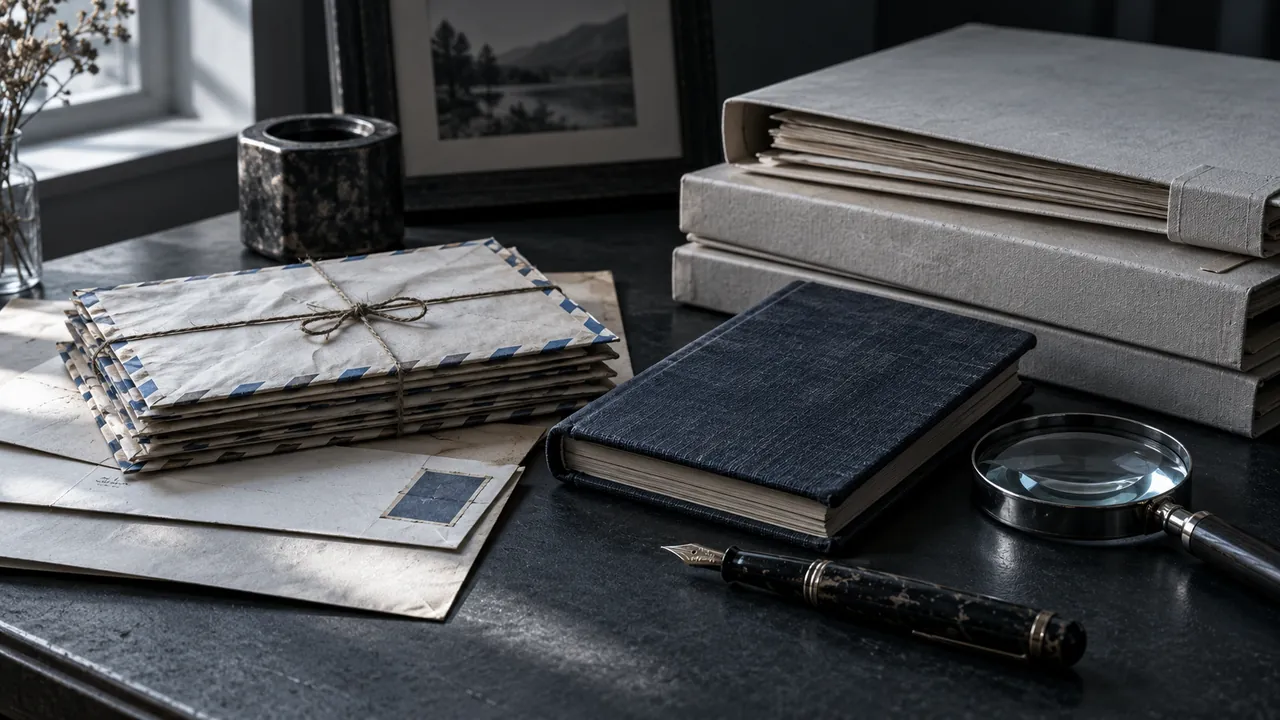
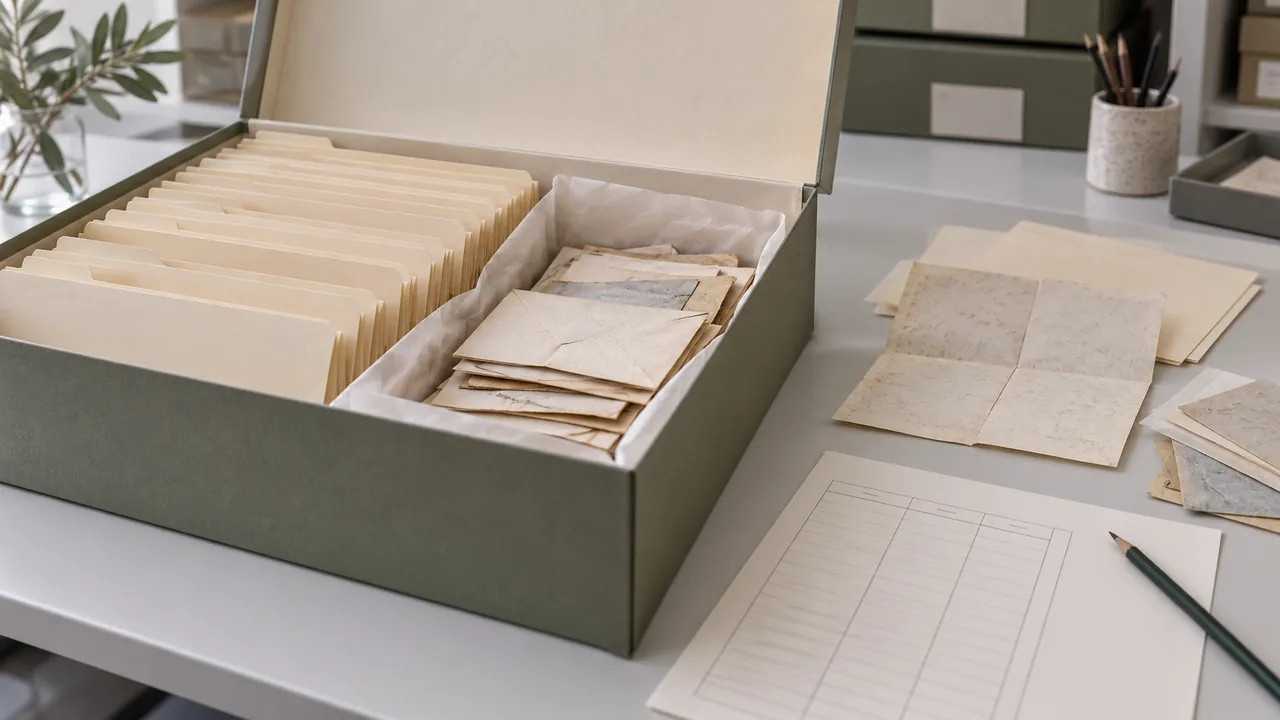
Choose one purpose: identify the school you shared, clarify a surname spelling or date a period of contact. Select only the items that may answer that question. Sorting everything at once can bury a useful clue under unrelated family material. Keep the bundle's original order where it carries context, and record who owns it before making copies.
Distinguish a letter you received from correspondence between other people. Possession of an envelope does not settle whether its contents should be shared. Use the minimum information needed for your own research and check with the relevant owner before circulating copies. A private index is often enough to prepare an invitation without exposing the full exchange.
2. Handle and copy the material carefully
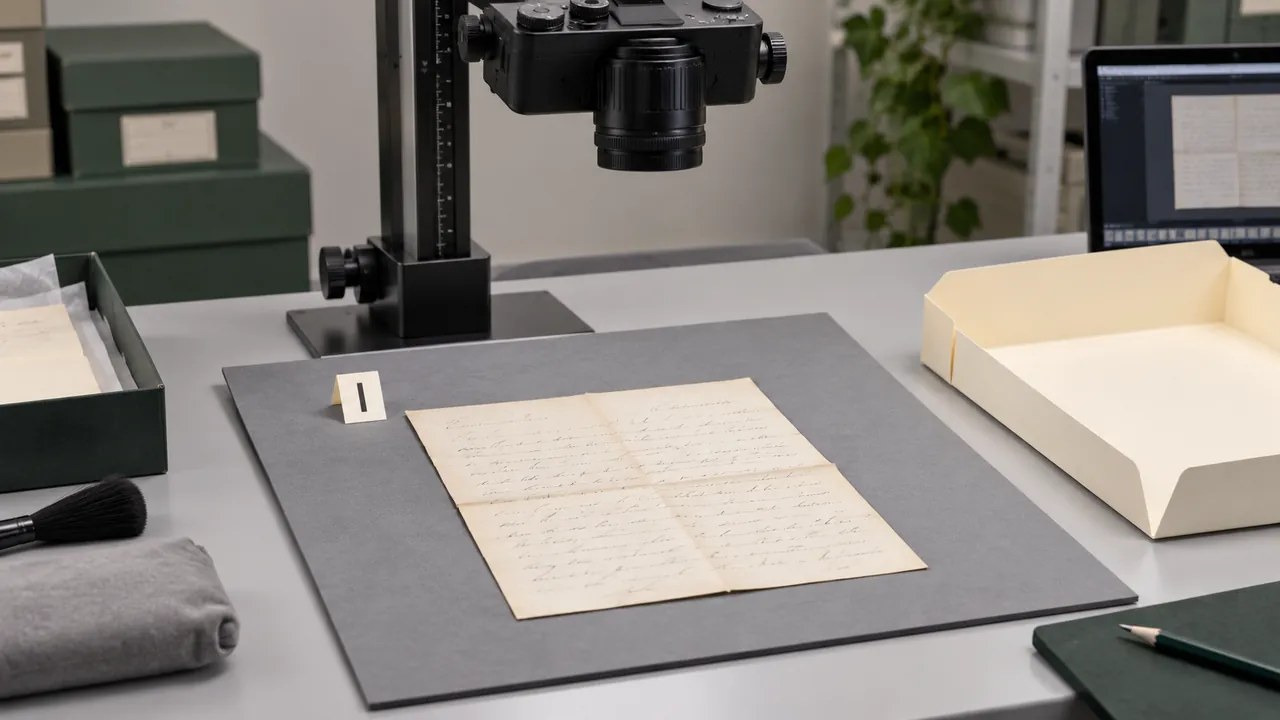
Use a clean, uncluttered surface and avoid forcing a brittle fold or pulling apart pages that resist opening. The National Archives family-archive guidance is a useful starting point for handling, storage and digitization questions. If material appears damaged or fragile, seek appropriate preservation advice rather than trying tape, glue or an improvised treatment.
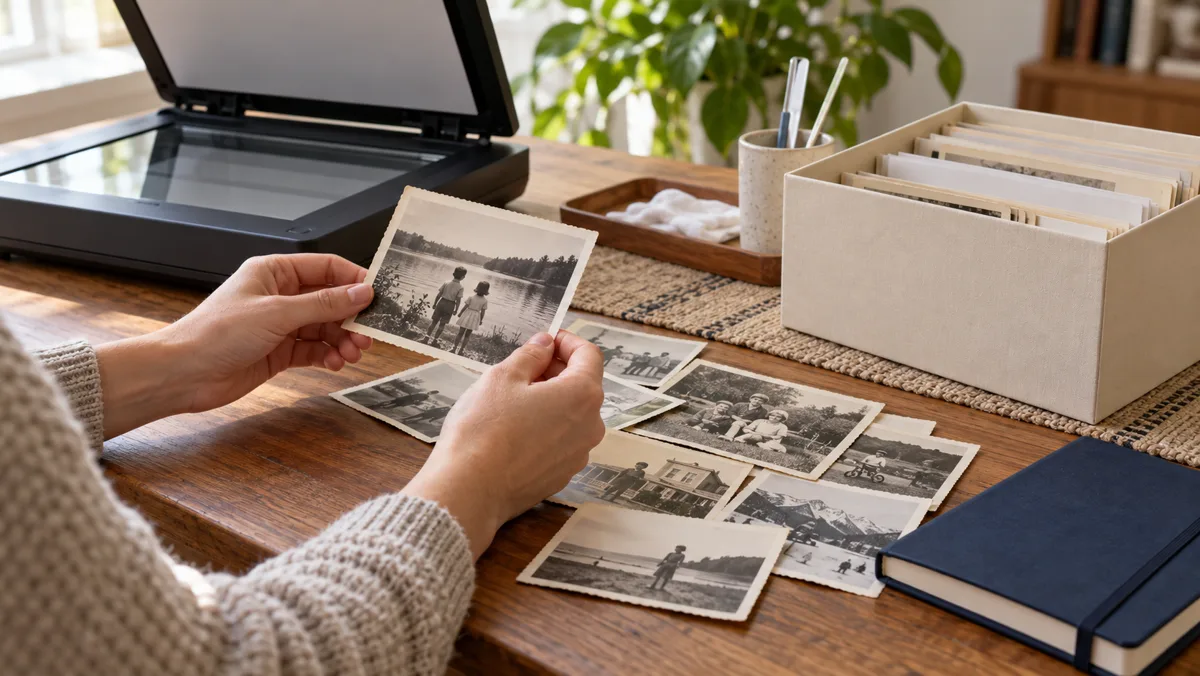
For a readable reference copy, capture the whole page and relevant envelope surfaces without pressing fragile items flat. Retain an untouched copy before making any contrast or crop adjustments. Assign a simple identifier, such as L-014, that links the digital file to the original item. Our archive organization guide applies the same principle of keeping source and copy connected.
3. Extract a clue without rewriting the document
Record the visible date, sender name as written, place reference and one relevant phrase. If a word is difficult to read, use a question mark in your research notes instead of silently replacing it. Keep an exact transcription separate from a modern spelling or your interpretation. A postmark, a date inside the letter and a later album caption can refer to different moments.
The National Archives document-analysis worksheets offer prompts for considering a source's creator, audience and context. Apply that habit to your own material: who wrote the letter, to whom and for what purpose? A return address may describe where a person could receive mail at that time, not where they lived permanently or where they can be contacted now.
4. Build an index that preserves uncertainty
Use a table with the item identifier, a dated clue, its source location and a next question. Keep separate columns for what the document states and what you infer. If a letter says that a friend is starting at a school, record that wording and date rather than upgrading it to proof of graduation. Link each clue back to the original page or file.
A short sharing note can say private, permission needed or cleared for a particular use. Do not place unnecessary addresses, telephone numbers or intimate passages in a public spreadsheet. Keep a backup of the index and test that you can open it. A system that is small enough to maintain is more useful than a complicated archive with no clear next action.
5. Compare clues across the right period
Look for a coherent timeline: an earlier school reference, a later town and a dated club mention may explain the sequence of contact. They do not automatically establish a current identity. When two items conflict, record both and consider whether you have mixed people with similar names or misunderstood an approximate date.
Use a historical clue to choose an appropriate public source, such as a school history or a library catalogue. The method in finding old school friends can help with an educational connection. Avoid sending mail to a decades-old home address simply because it is the only address in the bundle; current residents may have no connection to the person you remember.
6. Prepare a greeting without circulating the archive
A first invitation can explain the shared setting and offer a voluntary way to reply. It rarely needs a photograph of a private letter. If a willing mutual acquaintance can pass on your greeting, ask them to do that without revealing the recipient's contact details. Give them a concise message that does not require an explanation of your entire research.
If you later share a document with the friend, agree on the purpose and audience first. A personal reply is not automatic permission to publish the correspondence. When writing a public account, use clear source labels and remove details that are not needed. Keep the evidence for your own conclusion separate from the version suitable for readers.
7. Close the loop, whether or not contact resumes
End a research session by choosing one practical action: clarify a place name, check a dated collection or ask an intermediary to forward a greeting. You can organize a minimum-information private request through MissToSee. No archive or platform can guarantee that old correspondence will lead to a living person's current contact details or a renewed friendship.
If the person declines, stop trying to reconnect and keep the archive private. If the result remains uncertain, preserve the clues without attaching them to a stranger. A well-described letter still has value even when it does not solve the search. The aim is a careful relationship with the past, rather than a compulsory ending to every unanswered question.
A private correspondence index
| Field | Example entry | Keep separate |
|---|---|---|
| Item identifier | L-014, envelope and two pages | The digital copy and original location |
| Stated clue | School name written on page 1 | Your interpretation of the name |
| Date | Letter date and postmark | An estimated event date |
| Next action | Ask about a relevant collection | A claim about someone's present address |
The idea in 24 seconds
Original silent visual summary. Choose your subtitle language in the player, or read the summary below.
Read the video summary in English
- Choose one question — Select only the correspondence relevant to it.
- Preserve the source — Link each copy to its original item.
- Separate fact and inference — Old contact details describe a past context.
- Share a greeting, not an archive — Keep personal documents private unless sharing is agreed.
Before you start: a checklist
- Choose one research question.
- Keep the owner and original order noted.
- Assign a stable item identifier.
- Separate transcription from interpretation.
- Treat old contact details as historical.
- Share only what the purpose requires and permission allows.
Questions and answers
Can an old address help me find a friend?
It can suggest a past town, school or period to research. It should not be assumed to be the person's current address or used to involve unrelated present-day residents.
Should I upload a complete letter to ask for help?
Usually a limited description of the relevant clue is a better starting point. Check ownership and permission before sharing correspondence, and avoid exposing unrelated private details.
What if I cannot read the handwriting?
Keep a clear copy and mark uncertain words. Do not replace an unreadable name with a confident guess. A specialist archive or a willing knowledgeable reader may help with a limited transcription.
Can I throw away the originals after scanning?
A digital copy does not replace the original's preservation needs or value. Keep the originals appropriately and consult suitable guidance if their condition concerns you.
What if the letters do not lead to renewed contact?
The archive can still preserve a meaningful, documented memory. Keep the result unresolved rather than attaching the correspondence to an unconfirmed person or applying pressure for a reply.
Sources and further reading
These primary sources support specific points or offer further reading. Examples and templates are original editorial material, not quotations from these institutions.
- U.S. National Archives — Preserving family archives
Source in English
- U.S. National Archives — Document analysis
Source in English
Original editorial guidance prepared with digital assistance. All images are AI-generated conceptual illustrations, not historical documents, actual people or verified locations. Examples are fictional. The silent video is a montage of these illustrations.