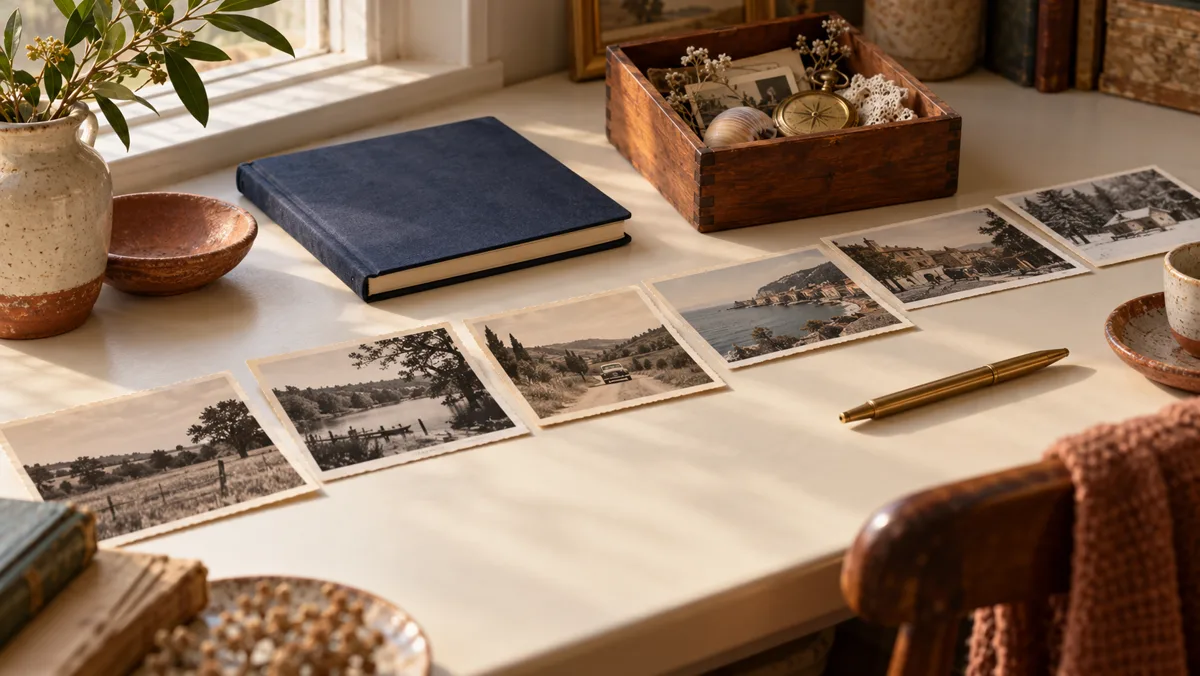
A vivid memory can become a meaningful story without every detail being certain. The aim is not to erase uncertainty but to help a reader understand what the account rests on. Keep the original recollection, identify supporting material and show where interpretation begins.
Write the memory before polishing it
Describe what you remember in your own words. Note when you wrote it and your relation to the event. Leave gaps visible. A smooth narrative can otherwise make a later guess seem like something you witnessed.
Build a source list
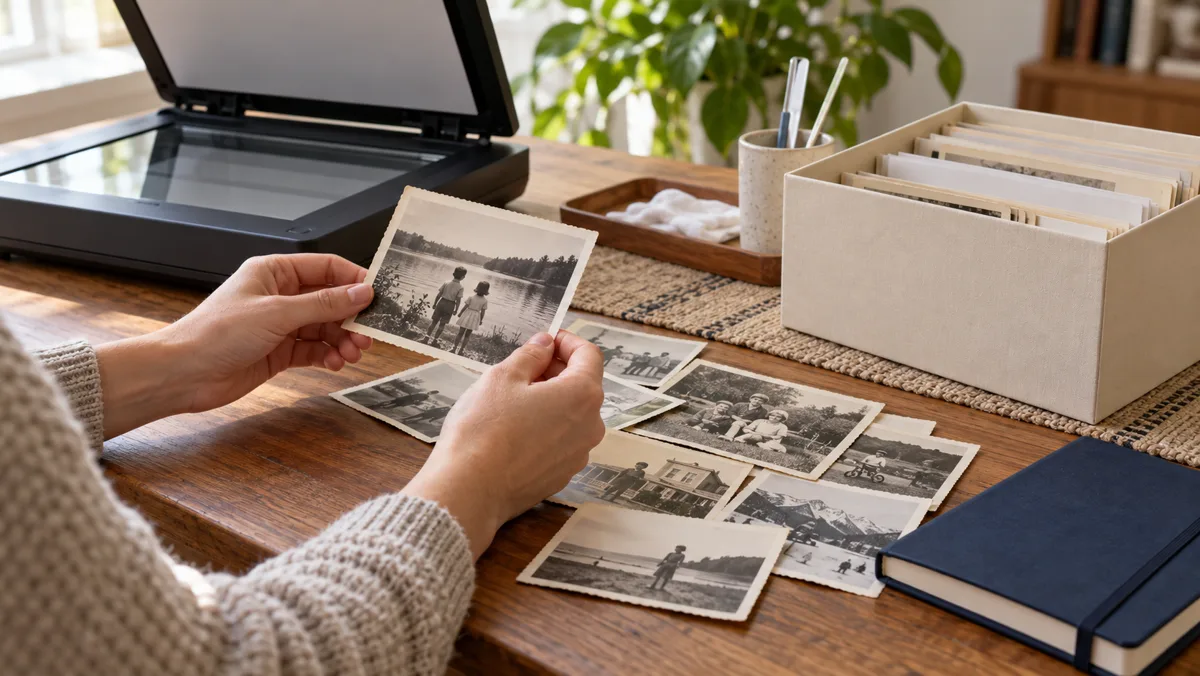
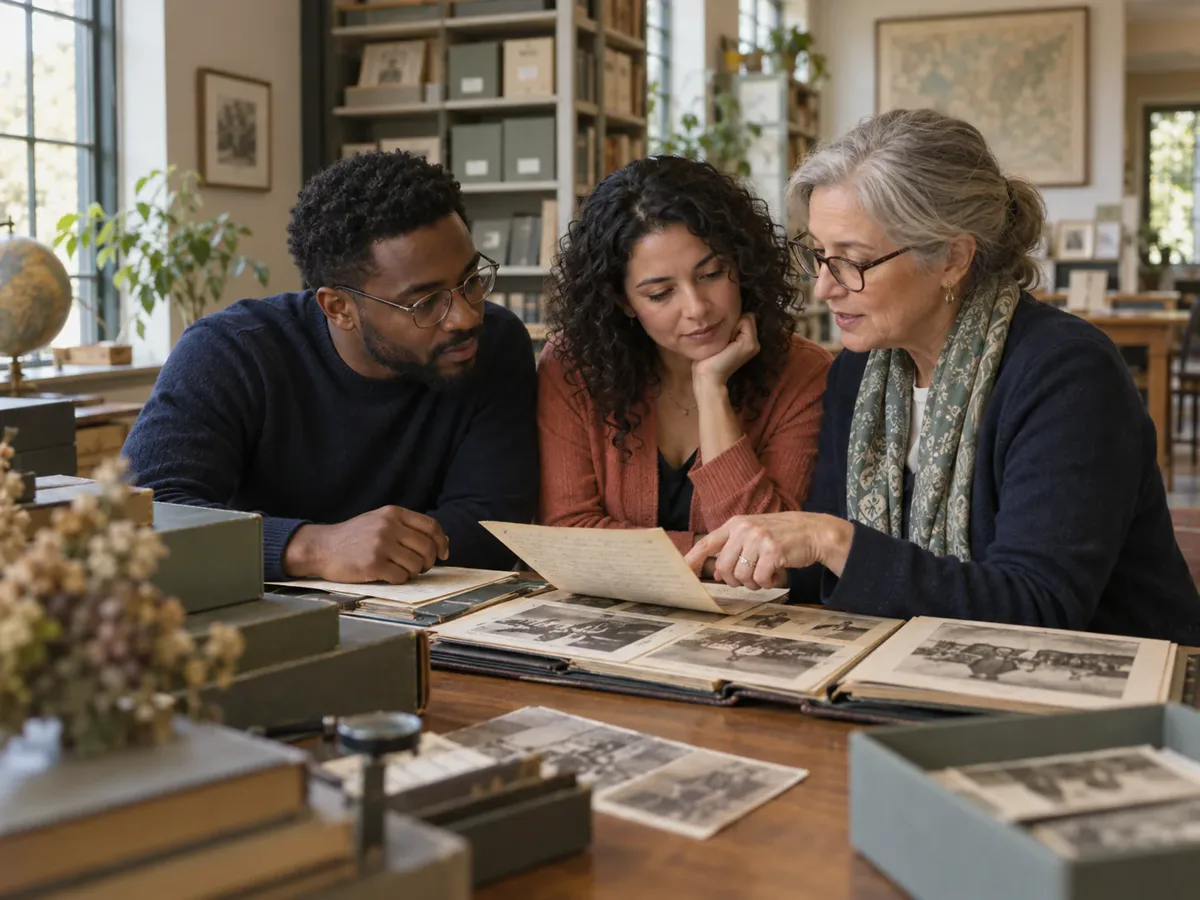
Collect relevant photographs, letters, interview notes or dated public records with permission. National Archives analysis worksheets offer questions about creator, audience and context. Record where each item came from and whether you have an original or a later copy.
Compare accounts without forcing agreement
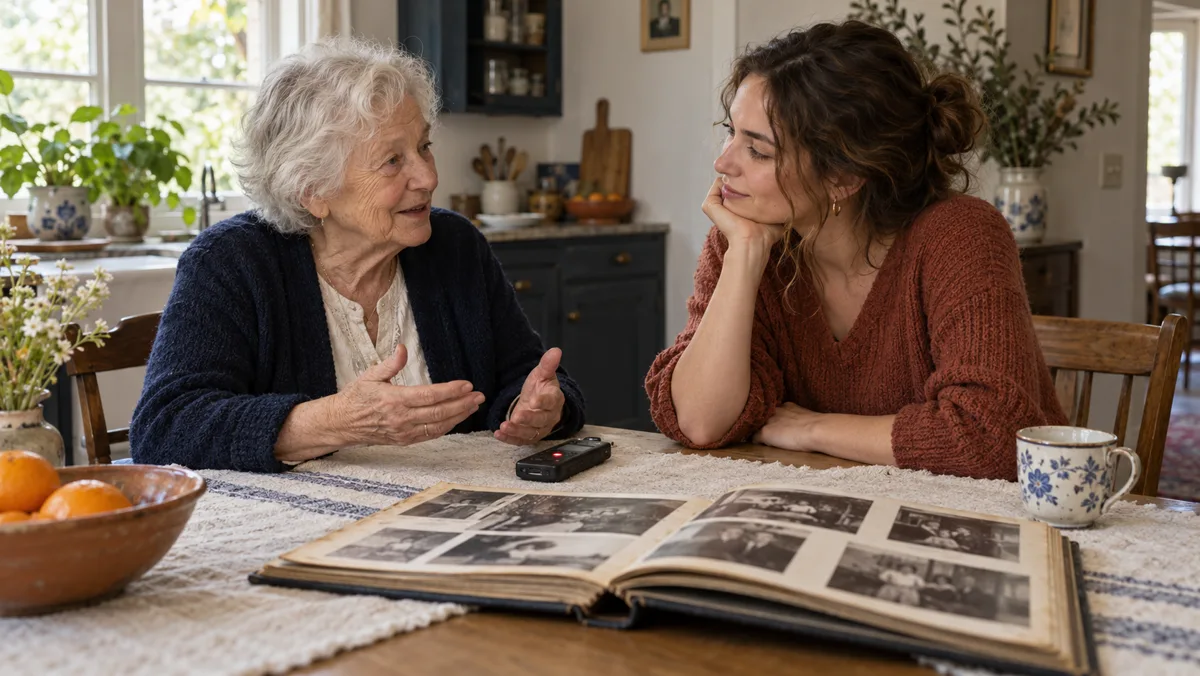
A family member may remember a different order or date. Ask open questions using a simple interview approach. Keep conflicting accounts attributed to their speakers rather than choosing the most convenient version without explanation.
The idea in 24 seconds
Original silent video with Arabic text. An English summary is available below; optional English subtitles can be enabled in the player's caption menu.
Read the video summary in English
- Write the memory — Keep the original recollection.
- List the sources — Record where details came from.
- Mark the gaps — Do not invent certainty.
- Share responsibly — Label images and respect permission.
Use images honestly
Distinguish a contemporary photograph from a later reconstruction or illustration. Do not use generated imagery as historical evidence. Check consent before sharing personal photographs. An organised archive makes it easier to retain captions and original sources.
Publish only what you can explain
Separate a supported date from an estimate and an invented example from a real account. Library of Congress family-story guidance and the Smithsonian interview guide can support the process. Offer a correction route and retain private material outside a public version.
Three labels that improve a story
| Type | How to present it | Record |
|---|---|---|
| Recollection | According to the speaker | Interview date and context |
| Documented detail | The dated record shows | Source reference |
| Uncertain inference | This may suggest | Reason and remaining doubt |
Before you start: a checklist
- Keep the original account.
- Name the source of each claim.
- Mark estimates.
- Label illustrations.
- Remove material not cleared for sharing.
Questions and answers
Can I tell a story with uncertain dates?
Yes, if uncertainty is explicit and estimates are not presented as verified dates.
Should conflicting memories be removed?
Not automatically. Different attributed accounts can show how the event is remembered.
Can generated pictures illustrate the story?
They may illustrate a theme if clearly labelled. They cannot substantiate what happened.
What if a reader finds a mistake?
Review the source, correct the public account where needed and keep a clear note of a substantive correction.
Sources and further reading
These primary sources support specific points or offer further reading. Examples and templates are original editorial material, not quotations from these institutions.
- US National Archives — Document analysis worksheets
Source in English
- Library of Congress — Preserving family stories
Source in English
- Smithsonian — Oral history interviewing guide (PDF, 15 MB)
Source in English
Editorial material prepared with digital assistance. Images are illustrative, including digitally generated scenes; they are not documented tracing cases, testimonials or geographic evidence. The video is an original summary with no third-party footage.