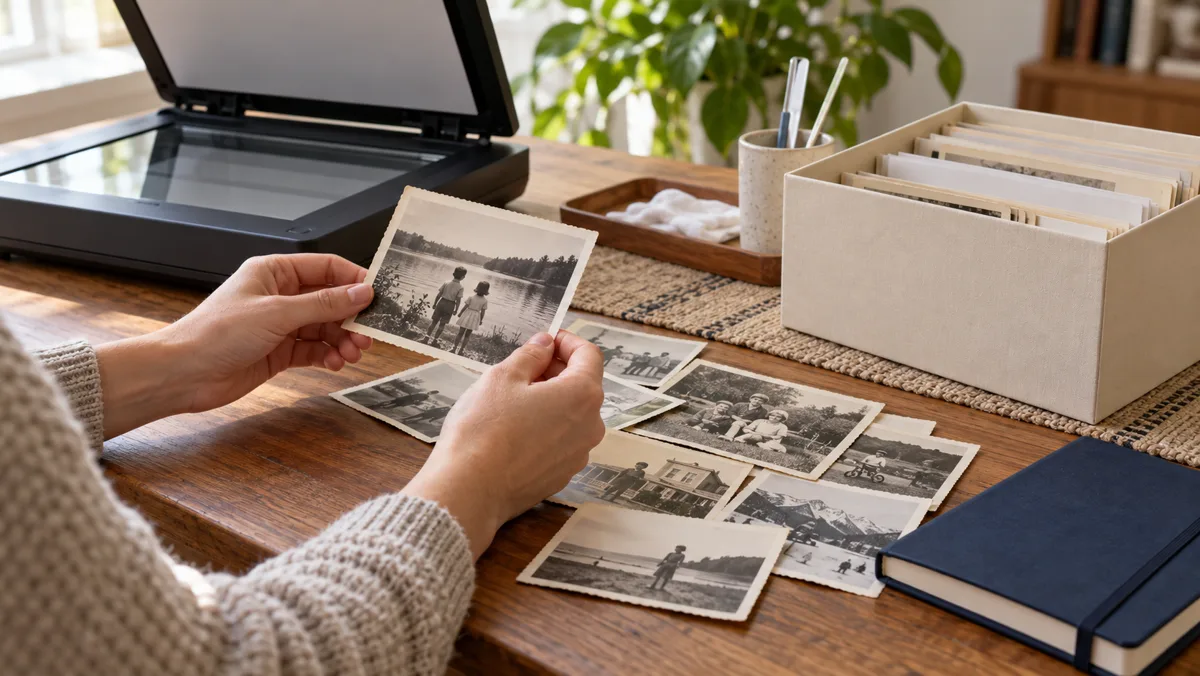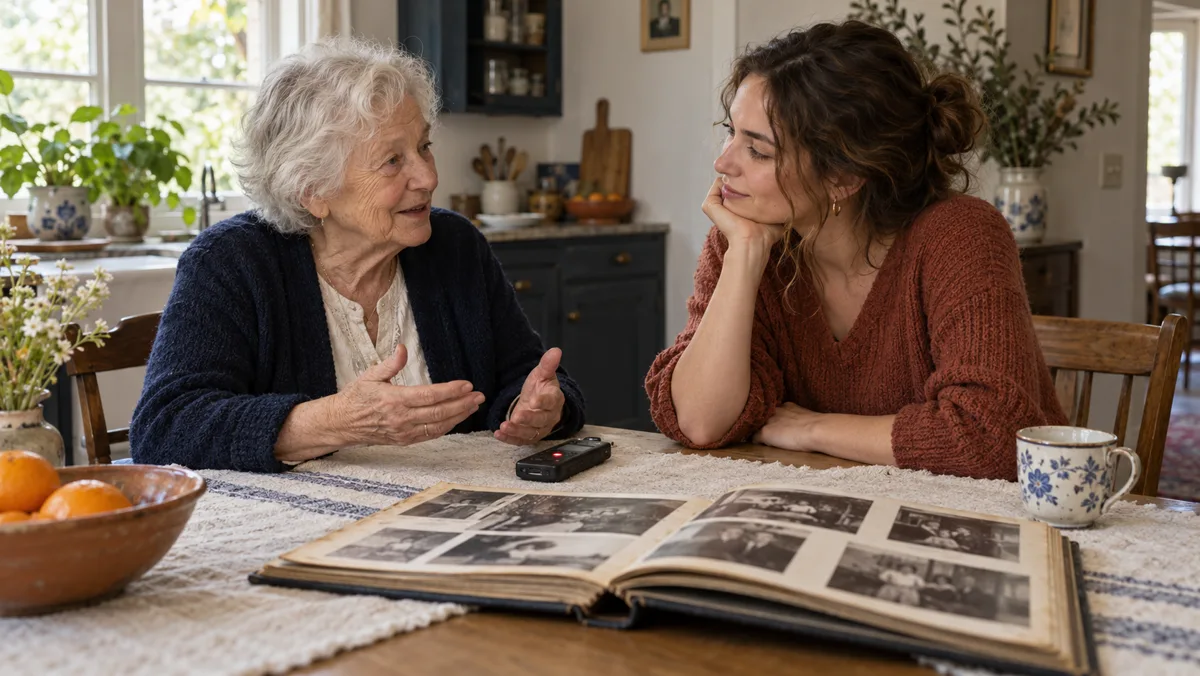
A useful family interview is a conversation, not an examination. Start with one subject the speaker wants to discuss and let them choose their own pace. Recording is optional; careful notes can also preserve a story when everyone understands how those notes will be used.
Choose one subject together
A school day, a first job or a remembered object is a manageable beginning. Ask whether the time and place feel comfortable. The Smithsonian interviewing guide offers ideas to adapt, not a rigid questionnaire to impose.
Agree on recording and access
Explain why you want to record, where files will be kept and who may hear them. Ask again if the audience or purpose changes. The speaker may skip a question or stop. Do not treat a family relationship as automatic permission to publish.
Ask open, grounded questions
Try 'What do you remember about that day?' and follow with 'What happened next?' Avoid inserting dates or motives into the question. Invite the speaker to distinguish what they saw personally from a story heard later.
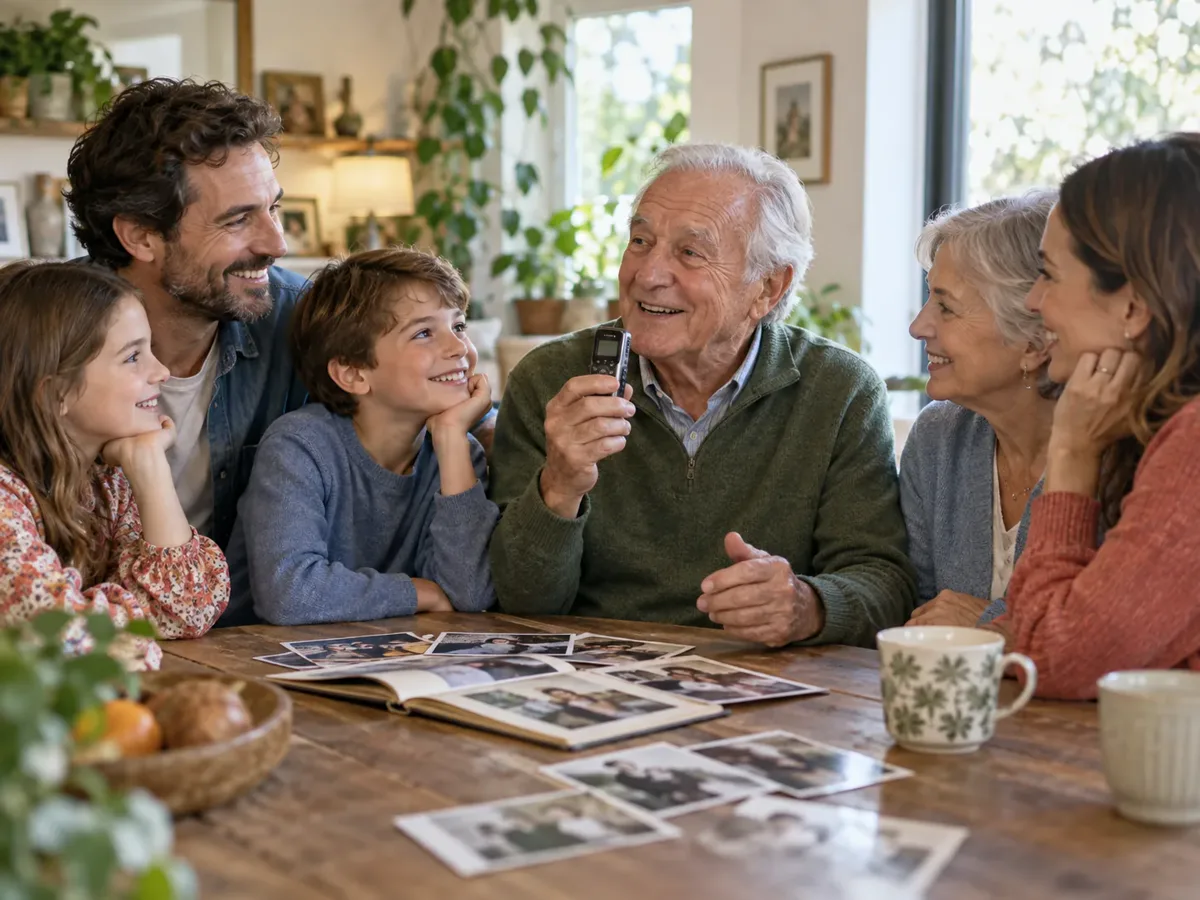
The idea in 24 seconds
Original silent video with Arabic text. An English summary is available below; optional English subtitles can be enabled in the player's caption menu.
Read the video summary in English
- Choose one topic — Start with a manageable memory.
- Ask permission — Agree on recording and audience.
- Listen openly — Do not supply the answers.
- Preserve context — Save date, source and access limits.
Let uncertainty remain visible
Do not interrupt every uncertain detail. Note a question for later comparison with photographs or dated records. The Library of Congress' family-story activity can help start a conversation. Different recollections can be kept side by side rather than forced into one version.
Save a usable record
Keep the interview date, topic, participants' preferred names and agreed access limits. Make a backup and offer the speaker a chance to review material intended for sharing. Archival digitisation guidance and a simple family archive support the next step.
Open questions for a first conversation
| Topic | Question | Follow-up |
|---|---|---|
| Place | What was the street like? | Which detail do you remember directly? |
| Event | What happened that day? | Who else might remember it? |
| Object | Why did you keep this? | May I photograph it? |
Before you start: a checklist
- Choose one topic.
- Agree on recording.
- Ask open questions.
- Record uncertainty.
- Save access limits with the file.
Questions and answers
Must I record audio?
No. Agreed written notes may be preferable. Explain their intended use as well.
What if a memory conflicts with a document?
Keep both sources and their context. Do not silently rewrite what the speaker said.
Can I post a short clip?
Only within the permission given. A private recording does not imply public-sharing consent.
How long should the first session be?
Choose a comfortable duration together and stop earlier if the speaker wishes.
Sources and further reading
These primary sources support specific points or offer further reading. Examples and templates are original editorial material, not quotations from these institutions.
- Smithsonian — Oral history interviewing guide (PDF, 15 MB)
Source in English
- Library of Congress — Preserving family stories
Source in English
- US National Archives — Digitising family archives
Source in English
Editorial material prepared with digital assistance. Images are illustrative, including digitally generated scenes; they are not documented tracing cases, testimonials or geographic evidence. The video is an original summary with no third-party footage.